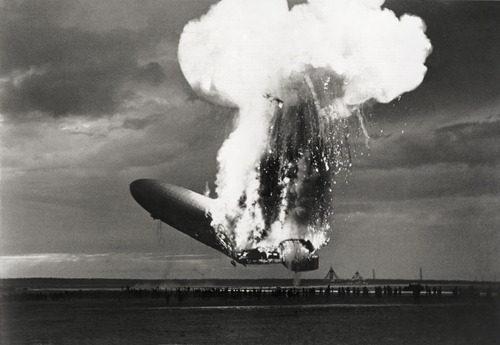

Brief Observations: Hindenburgs and Titanics
Turbulence in market internals, in the face of record market highs, is often a symptom of increasing risk-aversion and skittishness among investors.
Last week, the uniformity of market internals shifted to an unfavorable condition. During the advancing half-cycle since 2009, zero interest rates encouraged speculation (and maintained favorable market internals) long after extreme overvalued, overbought, overbullish conditions emerged. But distinctions matter. Once the uniformity of market internals - the most reliable measure of speculation itself - is knocked away, those extremes are still likely to matter with a vengeance.
Encouraged by the novelty of zero-interest rates, not even the most extreme “overvalued, overbought, overbullish” conditions have been enough to derail the speculative inclinations of investors. Yet in every other way, this speculative episode is simply a more extreme variant of others that have come before it.
Current market valuations are consistent with negative expected returns for the S&P 500 over the coming 10-12 years, with a likely market loss of more than -60% in the interim. The proposition that “lower interest rates justify higher valuations” has become a rather dangerous slogan, and is an incomplete statement.